Reference · Glossary
The Complete Fragrance Glossary
50 essential terms every perfume lover should know — from accord to sillage, soliflore to dry-down.
The world of perfumery has its own rich vocabulary — a language developed over centuries by perfumers, critics, collectors, and enthusiasts. Whether you’re navigating a fragrance review site, consulting with a perfumer, or deepening your own knowledge, fluency in these terms will transform your experience of scent.
Foundation Terms
| Term | Definition |
|---|---|
| Accord | A blend of two or more ingredients that creates a new, unified scent greater than the sum of its parts. The chypre accord and fougère accord are classic examples. |
| Note | An individual scent impression within a fragrance. Can refer to a specific ingredient (rose note, cedar note) or an abstract quality (powdery note, green note). |
| Olfactory family | A classification system grouping fragrances with similar aromatic characteristics. Major families include floral, oriental, woody, fresh, fougère, chypre, and gourmand. |
| Pyramid | The structure of a fragrance describing how it evolves over time, divided into top notes, heart notes, and base notes. |
| Concentrate | The raw fragrance material dissolved in alcohol to create a wearable perfume. Also called aromatic compound or perfume oil. |
Fragrance Construction
| Term | Definition |
|---|---|
| Top notes | The most volatile fragrance ingredients, experienced in the first 15–30 minutes after application. |
| Heart notes | The core character of the fragrance, emerging after top notes fade and lasting several hours. |
| Base notes | The most tenacious ingredients, forming the lasting foundation and dry-down of a fragrance. |
| Dry-down | The final stage of fragrance evolution, when the top and heart notes have faded and only the base notes remain. |
| Linear | A fragrance that smells essentially the same from first spray to dry-down, without significant evolution. |
| Sillage | Pronounced “see-yazh.” The trail or wake a fragrance leaves in the air as you move. From the French word for “wake.” Also called projection. |
| Projection | How far a fragrance extends from the skin into the surrounding air. |
| Longevity | How long a fragrance remains perceptible on the skin. |
Ingredient Categories
| Term | Definition |
|---|---|
| Soliflore | A fragrance built around a single flower, intended to capture that flower’s realistic scent. |
| Chypre | A classical accord of bergamot, labdanum, and oakmoss, named for the island of Cyprus. |
| Fougère | A constructed accord of lavender, oakmoss, and coumarin. Forms the backbone of classic masculine fragrance. |
| Gourmand | A fragrance family built on edible-smelling ingredients like vanilla, caramel, and chocolate. |
| Aquatic / Marine | Fresh fragrances evoking the sea, ocean air, or water. Often include Calone — a synthetic compound with a crisp, sea-spray quality. |
| Green | Fresh, natural notes evoking cut grass, leaves, or stems. Often includes violet leaf, galbanum, or fig. |
Natural Ingredients
| Term | Definition |
|---|---|
| Absolute | A fragrant extract obtained from botanical materials using solvent extraction. Often preserves the truest representation of the source material. |
| Essential oil | A volatile fragrant extract obtained through steam distillation of plant materials. |
| Enfleurage | A historical extraction technique where flowers are pressed against fat to capture their scent. Rarely used today due to cost. |
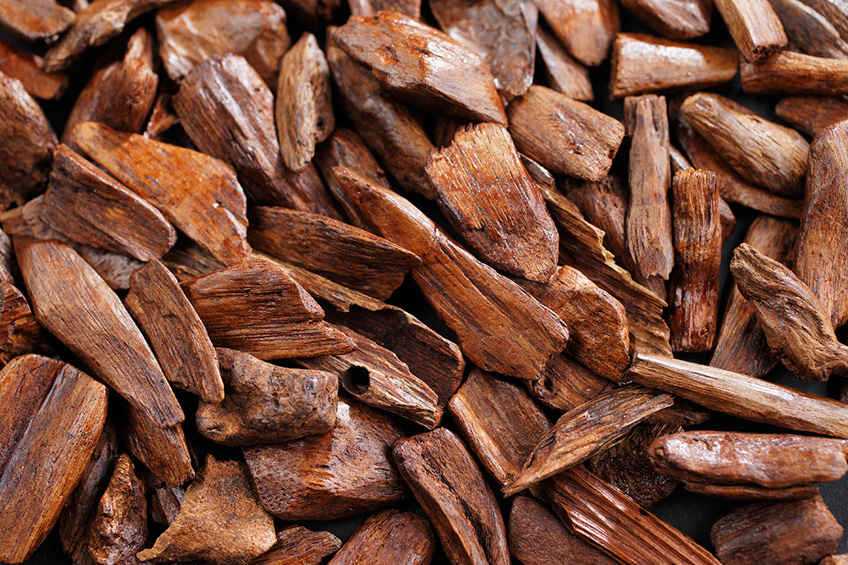
| Oud (Agarwood) | The resinous heartwood of infected Aquilaria trees. One of the most expensive fragrance materials in the world. |
| Vetiver | A grass native to India with a complex, smoky, earthy, woody root note. Widely used as a base note. |
| Ambergris | A waxy substance produced in the digestive tract of sperm whales, historically prized for its warm, animalic, marine character. Now almost universally replaced by synthetics. |
Synthetic Materials
| Term | Definition |
|---|---|
| Hedione | A synthetic jasmine derivative that contributes radiance and luminosity to a fragrance. |
| Iso E Super | A woody, cedar-like synthetic widely used in modern perfumery for its versatility and depth. |
| Calone | A synthetic marine compound used to create aquatic, sea-spray freshness. |
| Ambroxan | A synthetic amber material derived from ambergris. One of the most widely used base notes in contemporary perfumery. |
| Musk (synthetic) | A broad category of synthetic musks replicating the clean, warm, skin-like quality of natural animal musks. |
Community Terms
| Term | Definition |
|---|---|
| Nose | A trained perfumer. Also used colloquially to describe an individual’s sense of smell. |
| SOTD | Scent of the Day. Common abbreviation used in fragrance communities to share daily fragrance choices. |
| Blind buy | Purchasing a fragrance without testing it first, based on reviews or recommendations alone. |
| Decant | A small sample of a fragrance, typically a few milliliters, taken from a full bottle. Common in collector communities for testing. |
| Flanker | A variation on an existing fragrance, modifying one or more elements while retaining the core identity. |
| Batch variation | Differences in fragrance formula across different production batches, due to reformulation or ingredient availability. |
| IFRA | International Fragrance Association. The industry body that establishes usage guidelines for fragrance ingredients based on safety research. |
Questions & Answers
What is the difference between a note and an accord?
A note is a single scent impression — one ingredient or one quality (like “rose” or “powdery”). An accord is a blend of multiple notes that fuse together into something new — like how bergamot + labdanum + oakmoss creates the chypre accord, which smells like none of those ingredients individually but like something entirely its own.
Why is sillage important?
Sillage determines how a fragrance is experienced by others around you. A fragrance with strong sillage announces itself before you enter a room and leaves a trail after you leave. Low sillage (also called a “skin scent”) stays close to the body and is only noticed up close. Neither is inherently better — the right sillage depends on the occasion, the season, and your personal preference.
Go Deeper
Use These Terms in the Interactive Atlas
Explore every term, ingredient, and family relationship in The Perfume Librairie’s olfactory atlas.
Open the Atlas